The Architecture of Two Pickles and a Buttered Bun
Why simplicity is the hardest thing in cooking: whole-muscle breast meat, peanut oil pressure frying, toasted buttered bun, and two dill pickle chips.
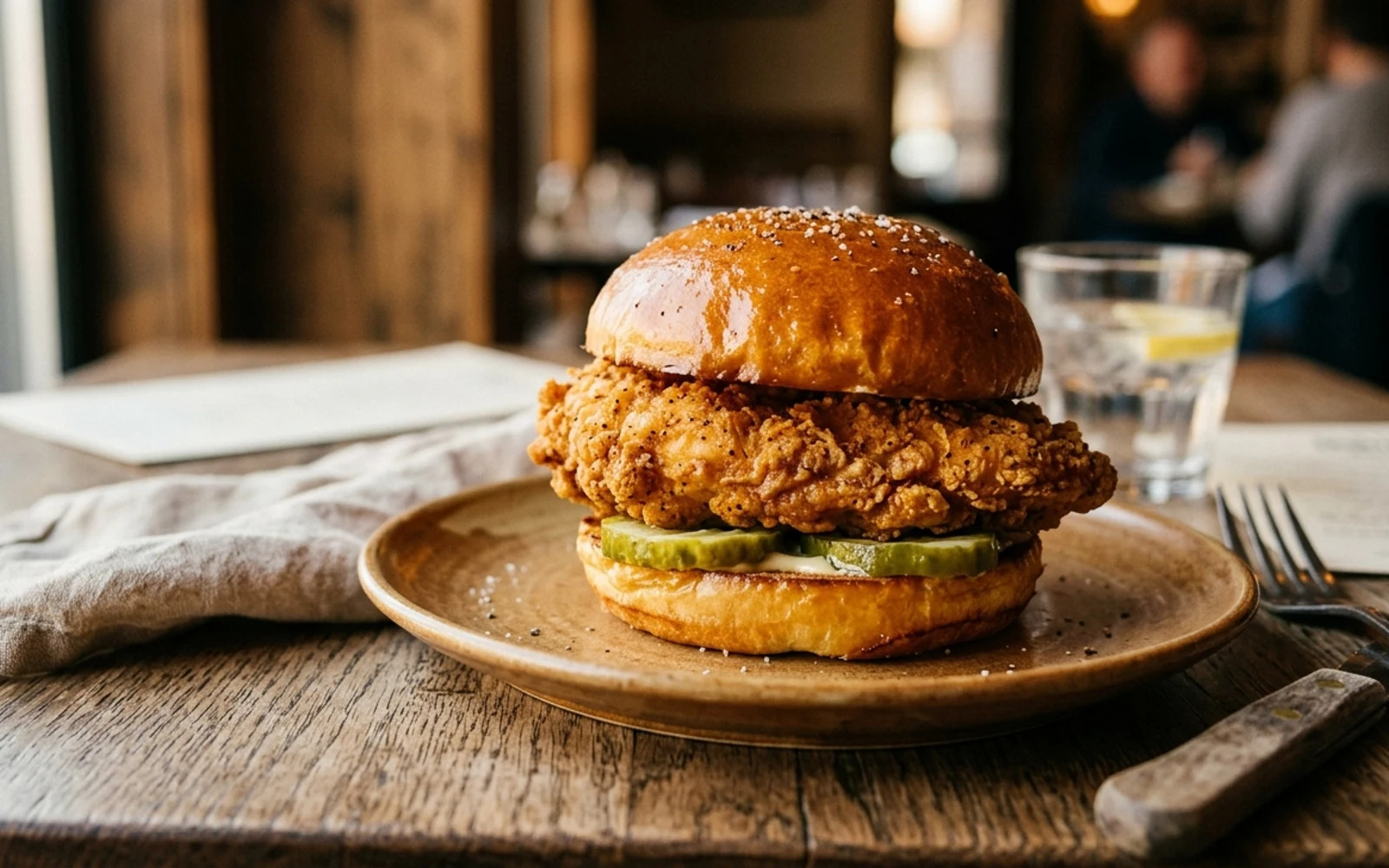
You cannot hide behind sauces or melted cheese when there are only four elements on the plate. Every single component must perform flawlessly.— Kitchen Master Note
The Restraint of Four Elements
In an era where fast-casual cooking frequently equates excess with quality, the Chick-fil-A Chicken Sandwich remains a defiant study in restraint. There is no lettuce wilting beneath steam, no slice of processed cheese muting the poultry flavor, and no slather of mayonnaise softening the crust. There are four elements, and each one bears full responsibility for the overall flavor profile.
When food has nowhere to hide, every flaw is magnified. A fraction of a millimeter variance in breading thickness or thirty seconds of temperature drift in the cooking vat can ruin the balance. This is why the sandwich is treated not merely as a fast-food staple, but as an architectural formula refined over six decades.
The Pressure Cooker Breakthrough
Cooking whole, bone-free chicken breast poses an inherent culinary problem: white meat dries out rapidly if exposed to sustained heat. Truett Cathy recognized in the 1960s that traditional open-pot deep frying could not achieve tenderness without sacrificing speed.
The solution was pressure cooking in 100% refined peanut oil. Under pressure, moisture within the chicken cannot easily vaporize into steam. Instead, it stays bound within the muscle fibers. The result is a fillet that emerges intensely juicy, enveloped in an ultra-crisp, golden-brown seasoned envelope.
The Geometry of the Dill Pickle
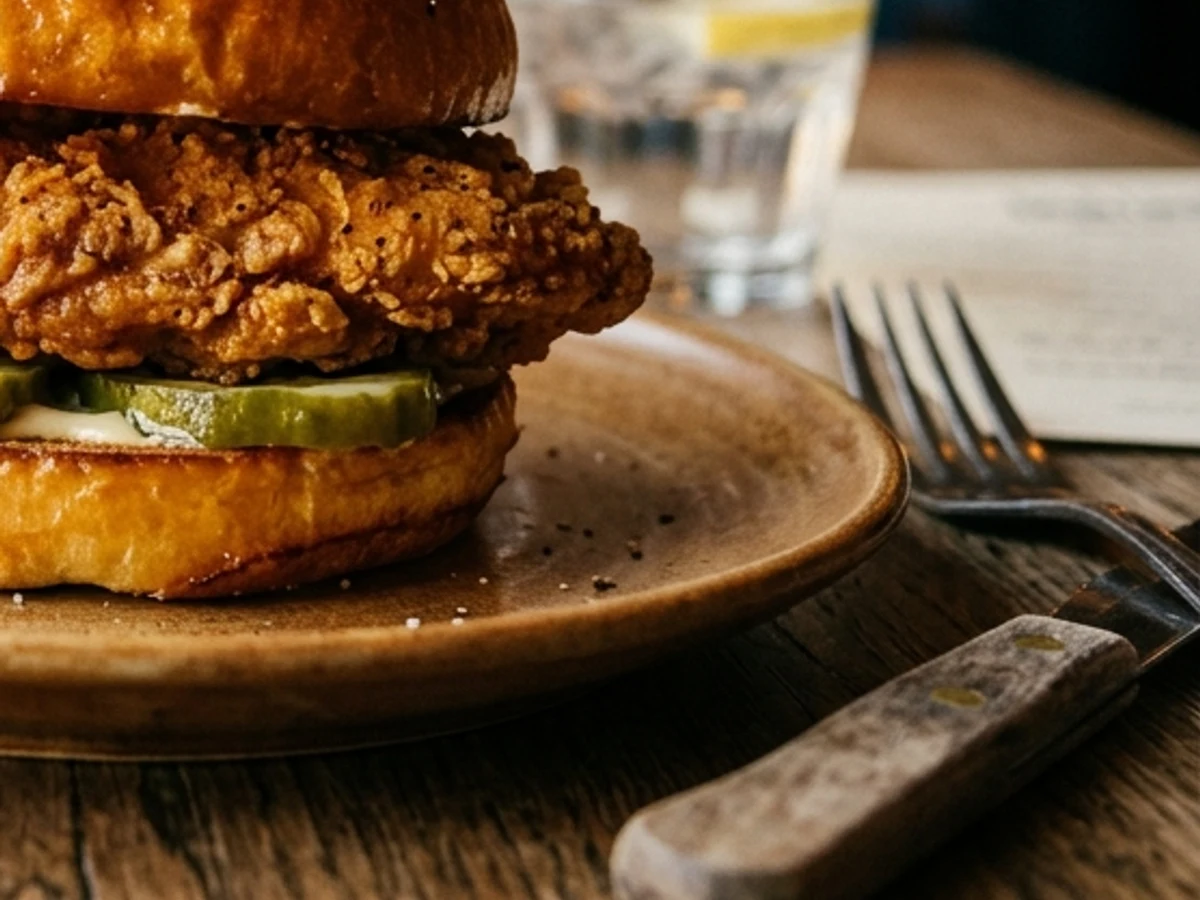
Why exactly two pickles? Why not pickle relish, a spear, or a slather of pickle brine? The answer lies in palate balance. Fried poultry and enriched yeast bread contain significant fat and natural sweetness.
The two thick-cut dill pickle chips introduce sharp lactic and acetic acid, garlic undertones, and an energetic snap. Placed directly between the bottom heel of the bun and the hot fillet, the heat gently warms the pickles, releasing fragrant dill aromas without dulling their crisp crunch.
The Toast and the Butter Wash
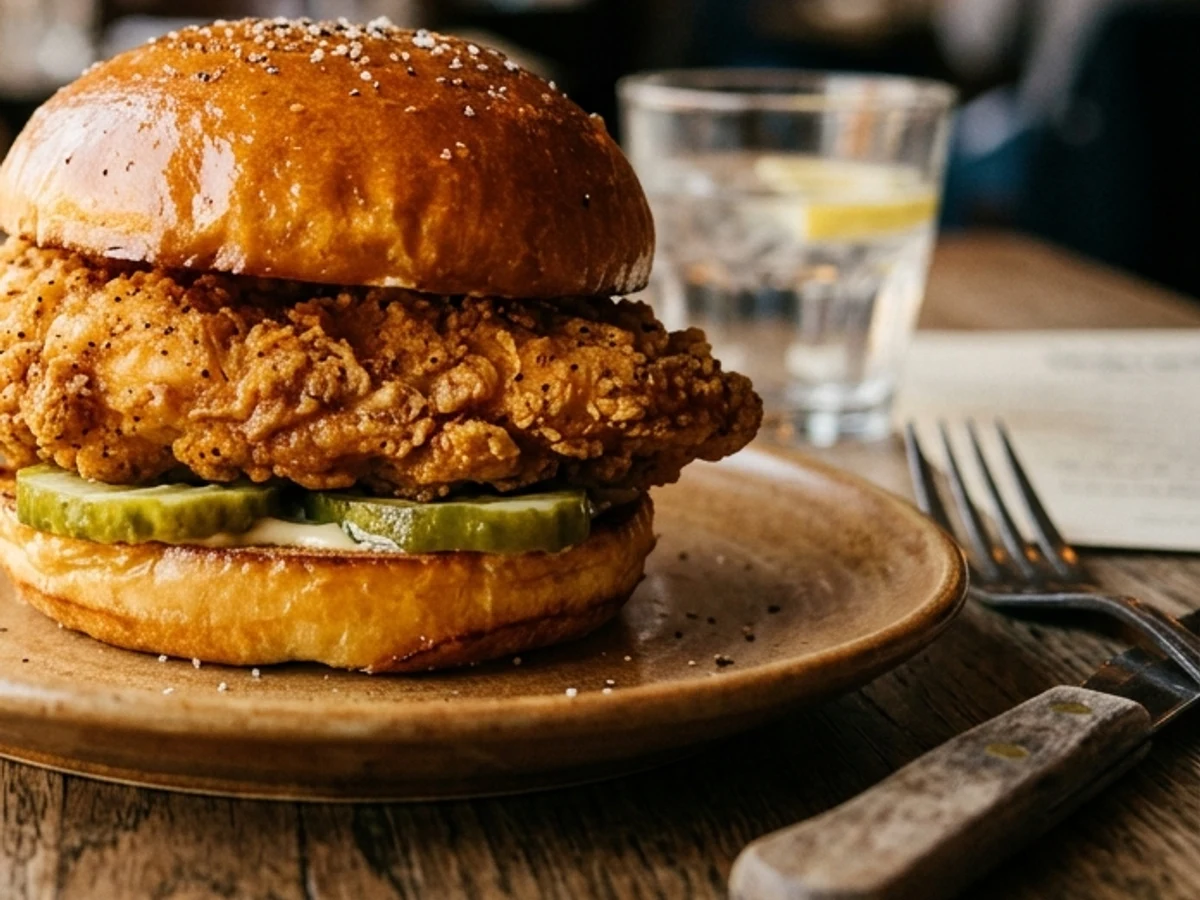
The final touch is the bun. Split yeast dough is placed cut-side down on a flat-top griddle seasoned with clarified butter until a uniform, golden-amber caramelization forms. This toasted barrier prevents the natural poultry juices and pickle moisture from soaking into the crumb.
When enjoyed hot off the line, the sandwich delivers crispness, steam, savory warmth, and bright acidity in unison—the unmistakable taste of culinary precision.
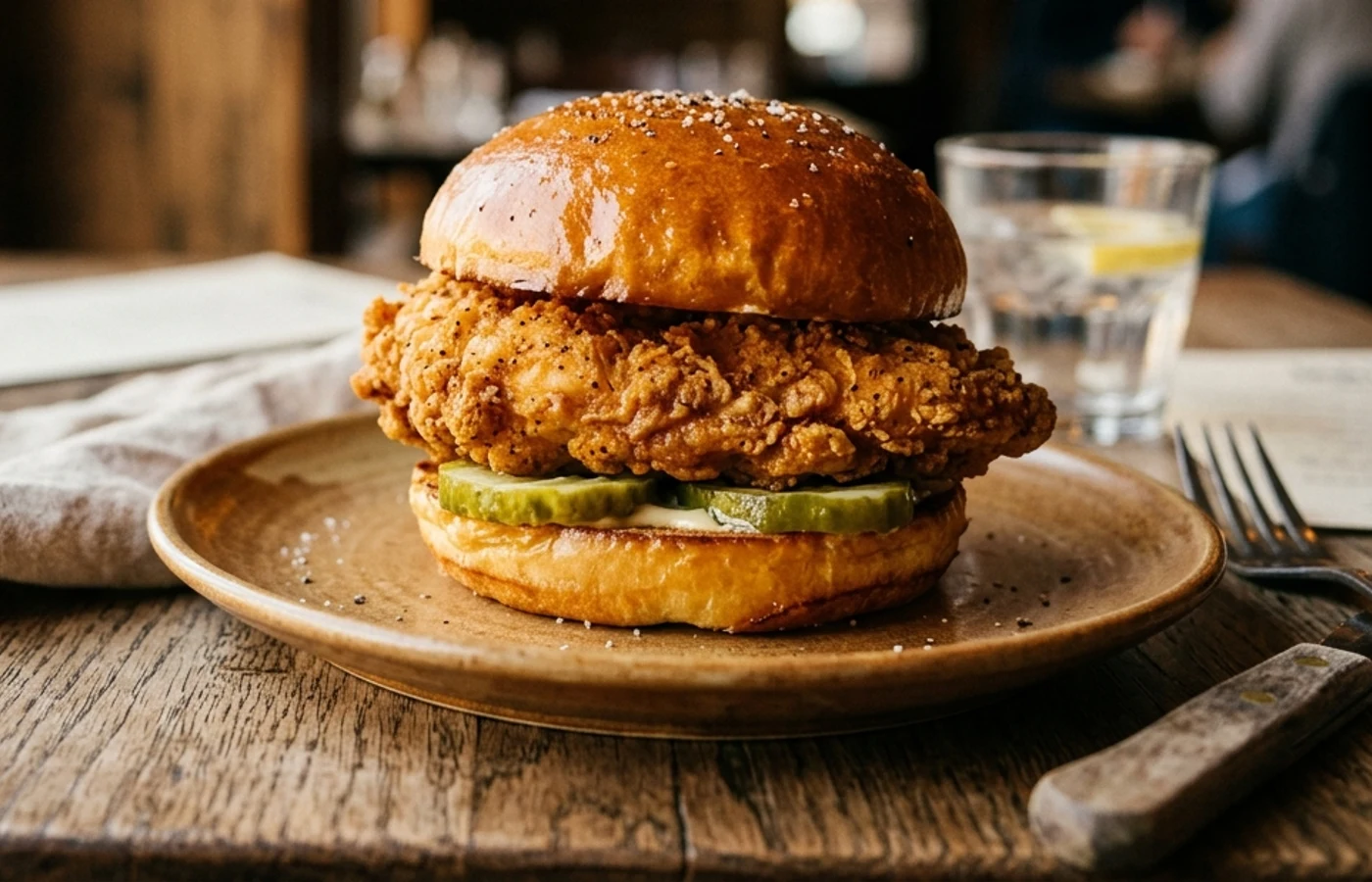
Photographic Study · 4 Perspectives
A comprehensive visual study capturing the exact culinary preparation across four distinct photographic angles.
Chick-fil-A® Chicken Sandwich
Featured in this story. Hand-prepared fresh daily in our restaurant kitchens with uncompromising craft and hospitality.